For practice, I am going to write out how I think I could differentiate the game Codenames right out of the box. These thoughts came to me while I watched my ESL class play. I tried to observe all the different skills involved with the game and how the students were interacting. I noticedContinue reading “Differentiating Codenames”
Tag Archives: board games
Differentiation in Board Games
I am working on integrating board games into my ESL curricula for next year. Board gaming is a personal hobby of mine, and games can bring lots of educational and developmental value to a classroom. One benefit is that certain board games lend themselves well to differentiation. “Family games” is the moniker used forContinue reading “Differentiation in Board Games”
Board of Executive Function
My son’s school recently hosted a TEDx Youth event – Reflect Restart Reconnect. They invited parents to present, so I jumped at the opportunity to sing the praises of board games. I focused on brain development and age-appropriate skills our children and students can practice through board gaming. Based on the audience reaction, especially allContinue reading “Board of Executive Function”
Scaffolded Splendor
I swear by two educational strategies and try to regularly implement them in my classes: scaffolding and spaced repetition. Of course, hundreds of other strategies exist, but these are my favorites. Scaffolded instruction is a simple idea. Content in skills should be taught in a “scaffolded” manner from simple to more complex. For example, aContinue reading “Scaffolded Splendor”
Taboo Talk Around
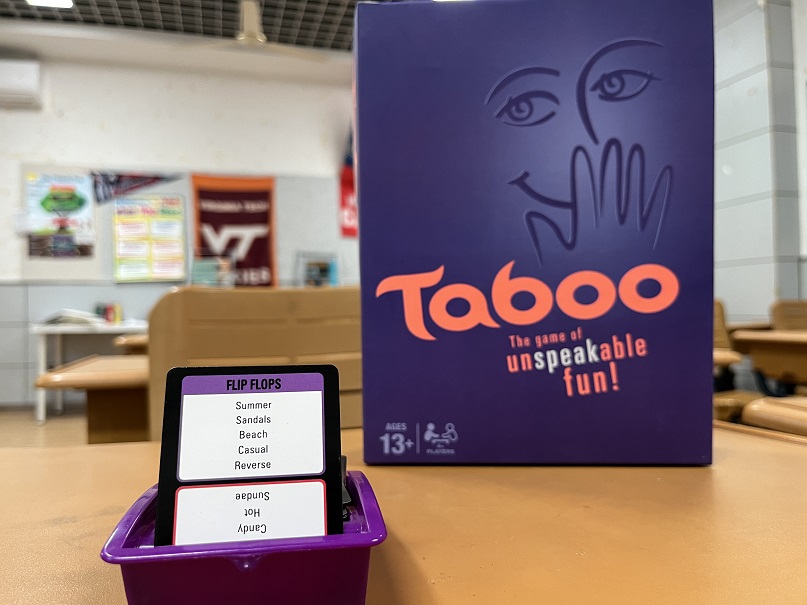
Speaking tasks are important for language learners. Speaking puts students on the spot and forces them to be quick and use their language in real time. This is difficult and might not be the best measure of a student’s ability, but speaking is fundamental to communication, so all language courses incorporate these activities. One ofContinue reading “Taboo Talk Around”
Codenames
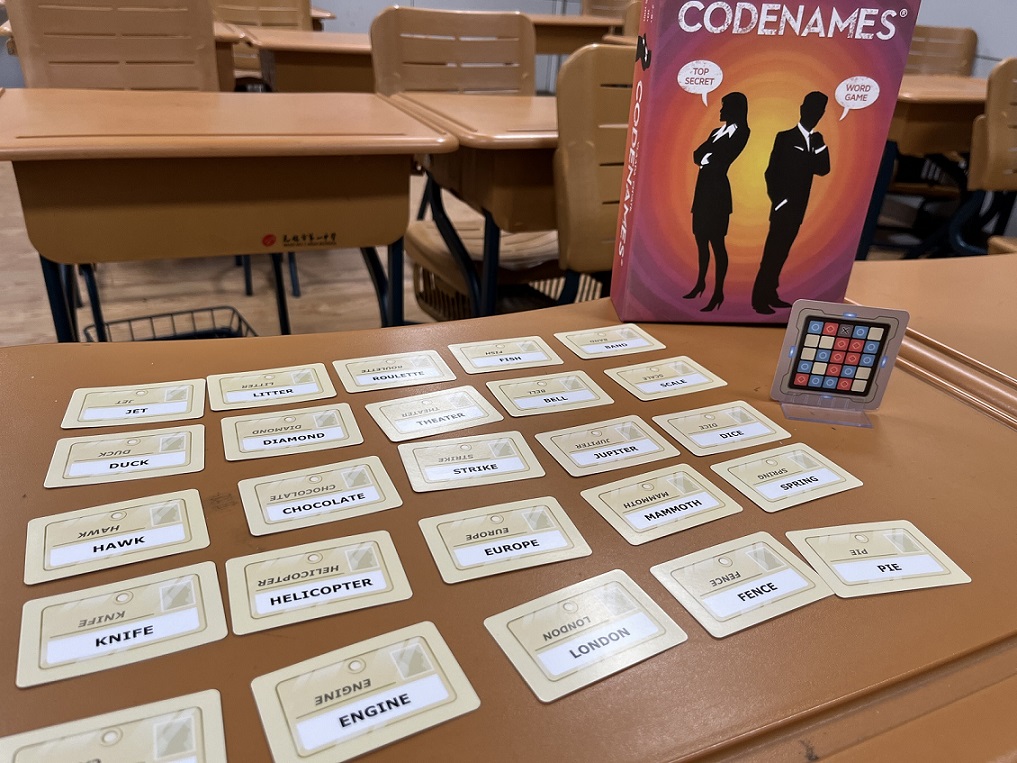
Codenames, designed by Vlaada Chvátil and published by Czech Games Edition, is one of the highest-ranked party games on BoardGameGeek. I think it is easier to adapt good games to a classroom than try to convince students edutainment games are good. When I use a game for class, I want the students to have funContinue reading “Codenames”
Play and Direct Learning

As an early childhood educator, my mom collects all sorts of books devoted to childhood development. When I told her she was going to be a grandmother, she dug through her library to pass on a few choice titles. One book was Play With a Purpose by Dr. Dorothy Einon. It must have been aContinue reading “Play and Direct Learning”
Spot It! Adjectives
Spot It!, also known as Dobble, is a matching game where players look at two circular cards and need to identify which object is on both cards. Each card shares exactly one object with every other card. The game comes in a variety of themes to match the intended audience. Spot It! can help ELLContinue reading “Spot It! Adjectives”
Parallel (play) Intersections
Parallel play is a vital stage of toddler development. Emerging between two an three years, parallel play involves toddlers “playing alone, together.” When two children sit at the same table and build their own block towers, that’s parallel play. Children learn a lot from parallel play. While they aren’t directly communicating, they are stealing glancesContinue reading “Parallel (play) Intersections”
Why Board Games?
Games should always have a place in class. When students are having fun and feeling good, their affective filters lower, and they become more receptive to learning. However, not all games are created equally. There has been lots of research and handwringing over screen time, and I think educators are responsible for providing alternativesContinue reading “Why Board Games?”
 The Keasy Depot