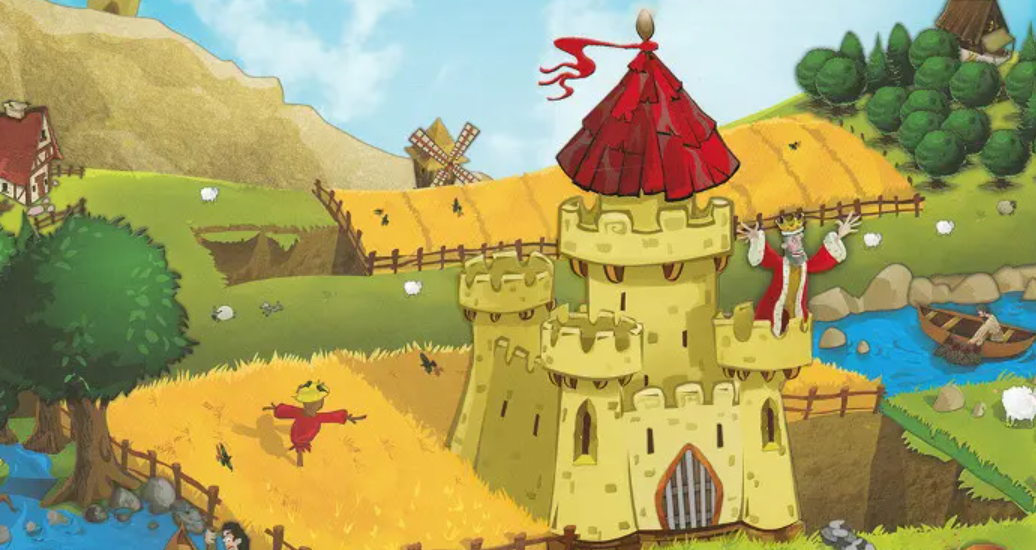
Kingdomino is a light-weight and highly regarded tile-laying game. The simple rules and strategy make it perfect for families with young children. Kids quickly learn that there is a tradeoff between turn order and selecting the best tiles. If you choose a high-scoring tile this turn and you will almost certainly get the last to choose next turn. ScoringContinue reading “The Math of Kingdomino”
Category Archives: Cardboard Classrooms
Girls, STEM, and Board Games
The movement to get more girls into STEM is laudable and ongoing. Leaving aside any social and cultural barriers to girls in STEM fields, in Boys and Girls Learn Differently, Michael Gurian claims that male brains are gender-advantaged for spatial and abstract reasoning, and female brains are gender-advantaged for socialization and relationships. There are manyContinue reading “Girls, STEM, and Board Games”
The Hive Photo Safari
This is a great post by BGG user @dodger. They used their learners’ love of Hive as an excuse to lead a photo safari and find insects (and a spider) living in natural environments. Ideas like this are what make teaching fun. @dodger combined a game and field trip into a creative activity. There areContinue reading “The Hive Photo Safari”
Defining “Better” with Toy Cars
High school students often struggle narrowing and defining their research topics. A common topic looks something like “To what extent do short videos affect teenage health?”. That’s an incredibly difficult topic to research, in large part because we haven’t defined “health.” Are we talking obesity? Blood pressure? Kidney stones? The possibilities are endless. Helping ourContinue reading “Defining “Better” with Toy Cars”
There’s no More or Less, you need to cite sources
I recently came across a copy of the More or Less card game even though it’s a UK exclusive. In my continuing quest to jam games into my clases, I found a fun way to incorporate it into my AP Research course. First, More or Less is an extremely simple party game. One side ofContinue reading “There’s no More or Less, you need to cite sources”
Tic-Tac-Toe
I came across this wonderful post on BGG about tic-tac-toe’s true greatness. Posted by marc lecours (@rubberchicken), tic-tac-toe is one of the first games children can solve so they learn that games involve strategy, not luck. https://boardgamegeek.com/thread/3110151/article/42550066#42550066 I recommend reading the entire post. It really changed my view on how can tic-tac-toe can be usedContinue reading “Tic-Tac-Toe”
Board Games and Learning Standards
I am working on a personal project this summer to align my board games to educational standards. This interests me for two reasons. First, it forces me to think more deeply about the mechanics of the games. It also familiarizes me with educational standards outside what I teach, specifically math and early childhood education standards.Continue reading “Board Games and Learning Standards”
Differentiating Codenames
For practice, I am going to write out how I think I could differentiate the game Codenames right out of the box. These thoughts came to me while I watched my ESL class play. I tried to observe all the different skills involved with the game and how the students were interacting. I noticedContinue reading “Differentiating Codenames”
Differentiation in Board Games
I am working on integrating board games into my ESL curricula for next year. Board gaming is a personal hobby of mine, and games can bring lots of educational and developmental value to a classroom. One benefit is that certain board games lend themselves well to differentiation. “Family games” is the moniker used forContinue reading “Differentiation in Board Games”
Board of Executive Function
My son’s school recently hosted a TEDx Youth event – Reflect Restart Reconnect. They invited parents to present, so I jumped at the opportunity to sing the praises of board games. I focused on brain development and age-appropriate skills our children and students can practice through board gaming. Based on the audience reaction, especially allContinue reading “Board of Executive Function”
 The Keasy Depot